







 2026-06-26 20:00
 By By KESONLY


Understanding HPHT vs. CVD
Science meets sparkle: How modern technology creates real diamonds.
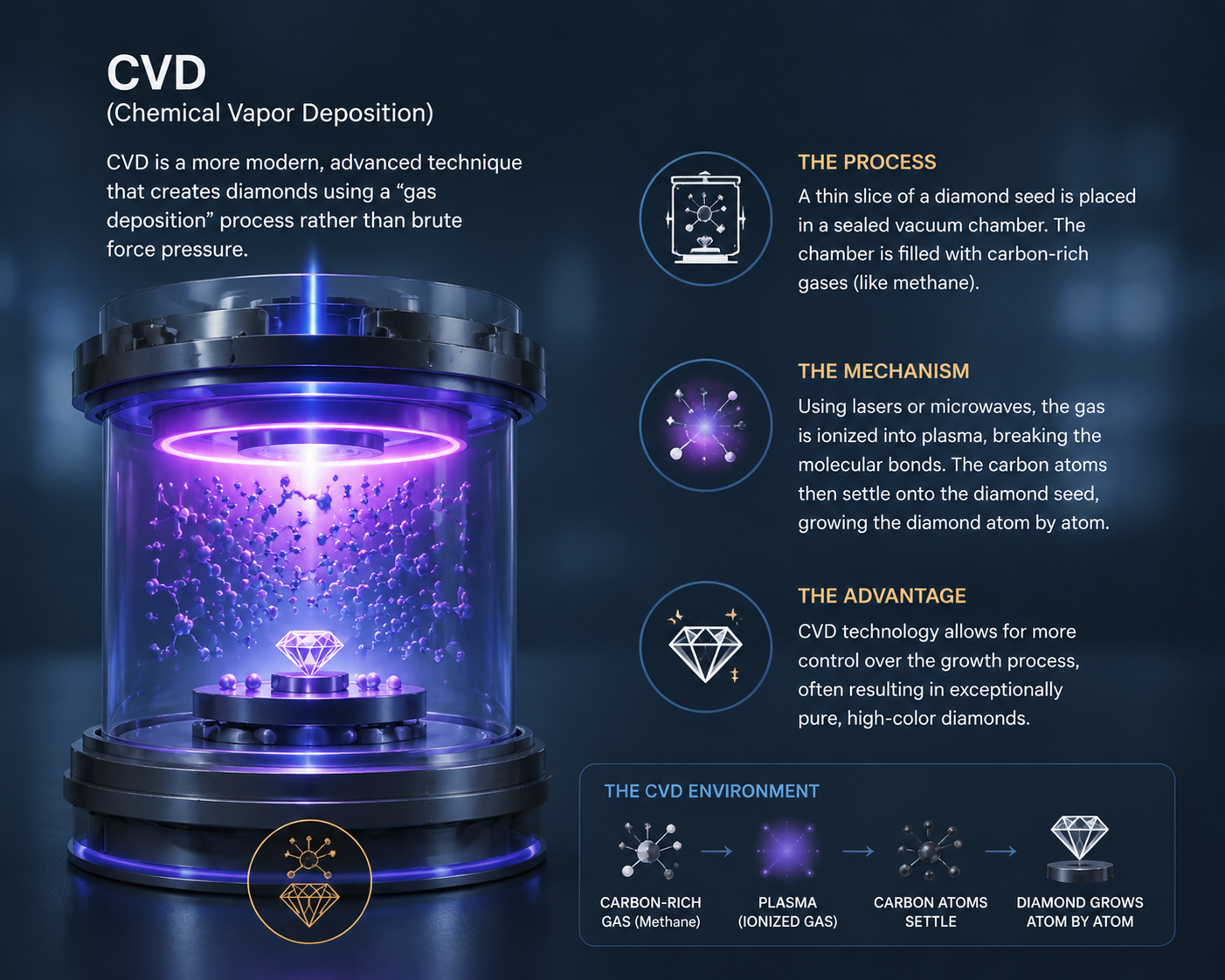
If you are exploring the world of lab-grown diamonds, you’ve likely encountered two acronyms: HPHT and CVD. While both result in a diamond that is chemically, physically, and optically identical to a mined diamond, they are born through very different scientific processes.
In this guide, we demystify these two technologies to help you understand exactly what you are wearing.
1. The Basics: Are They Both Real?
Before diving into the tech, let’s be clear: Both HPHT and CVD diamonds are real diamonds. They are not cubic zirconia or moissanite. They are composed of pure carbon atoms arranged in the same crystal structure as earth-mined diamonds. Leading laboratories (GIA, IGI) grade them using the exact same 4C criteria.
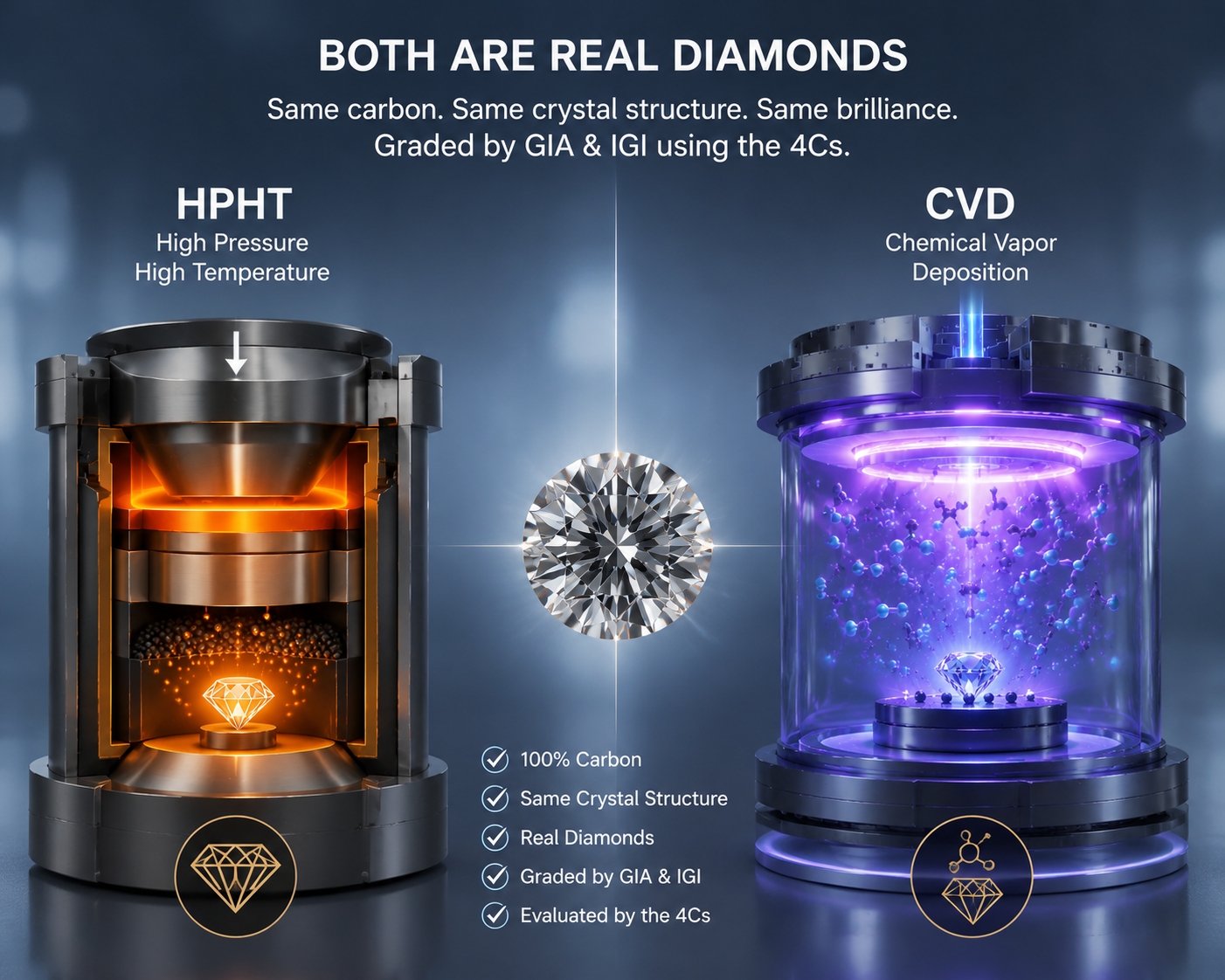
2. HPHT (High Pressure, High Temperature)
HPHT was the first method developed to create diamonds. It replicates the extreme conditions found deep within the Earth's mantle.
- The Process: A tiny "diamond seed" is placed in a press. Under intense pressure (1.5 million pounds per square inch) and high temperatures (over 2,500°F), carbon is dissolved and deposited onto the seed.
- The Result: The carbon crystallizes layer by layer, growing into a diamond.
Best For: Historically, HPHT has been excellent for producing high-clarity, high-carat stones.
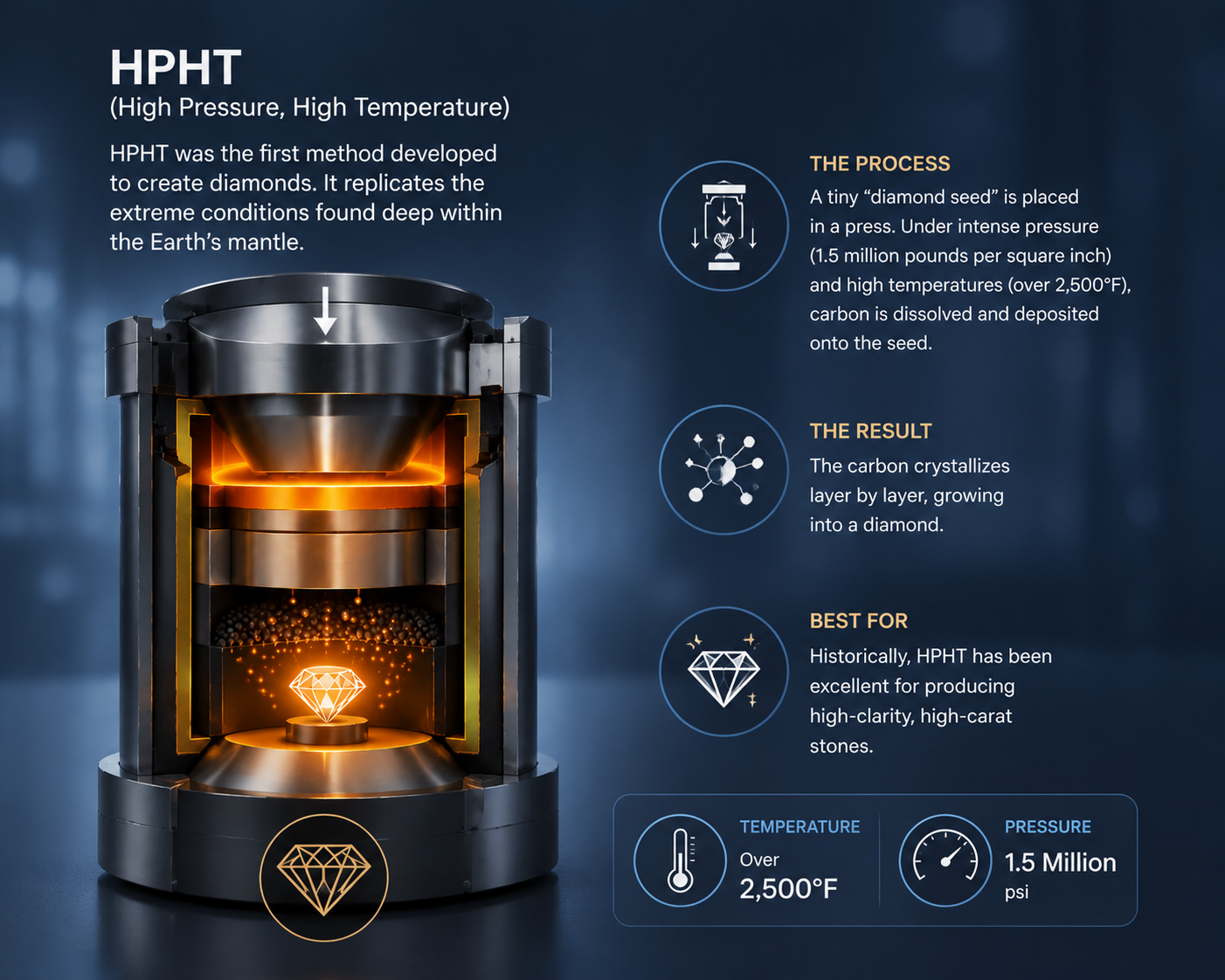
3. CVD (Chemical Vapor Deposition)
CVD is a more modern, advanced technique that creates diamonds using a "gas deposition" process rather than brute force pressure.
- The Process: A thin slice of a diamond seed is placed in a sealed vacuum chamber. The chamber is filled with carbon-rich gases (like methane).
- The Mechanism: Using lasers or microwaves, the gas is ionized into plasma, breaking the molecular bonds. The carbon atoms then settle onto the diamond seed, growing the diamond atom by atom.
The Advantage: CVD technology allows for more control over the growth process, often resulting in exceptionally pure, high-color diamonds.
Comparison at a Glance
| Feature | HPHT | CVD |
|---|---|---|
| Growth Method | High pressure & heat | Carbon-rich gas & plasma |
| Primary Strength | Extreme hardness & clarity | High color purity & customization |
Which One Should You Choose?
The answer is: it doesn't matter as much as you might think.
Because the final product—the diamond—is chemically identical regardless of the growth method, the choice should not be based on the technology, but on the 4C quality grade (Carat, Cut, Color, Clarity) and the certificate attached to the stone. Whether HPHT or CVD, a high-quality lab-grown diamond is a perfect choice for those who value ethical sourcing, sustainability, and unparalleled value.
Explore Our Ethical Diamond Collection
At KESONLY, we are proud to offer a curated selection of premium lab-grown diamonds. Every stone comes with a full grading report, ensuring you know exactly what you are getting.
Contact Our Experts