







 2026-06-29 19:00
 By By KESONLY


The "Eye-Clean" Secret: How to Master Diamond Clarity Without Overspending
You don't need a "Flawless" diamond to get a flawless look. Here is the industry secret to saving your budget.
When clients first start their diamond journey, many assume they need an IF (Internally Flawless) or VVS (Very Very Slightly Included) diamond to ensure it looks beautiful and clear.
While flawless diamonds are incredibly rare and scientifically fascinating, from a practical standpoint, buying the highest clarity grade isn't always the smartest financial move. At KESONLY, we teach our clients a different approach: hunting for the perfect "Eye-Clean" diamond.
 1. What are Inclusions? (Nature's Fingerprints)
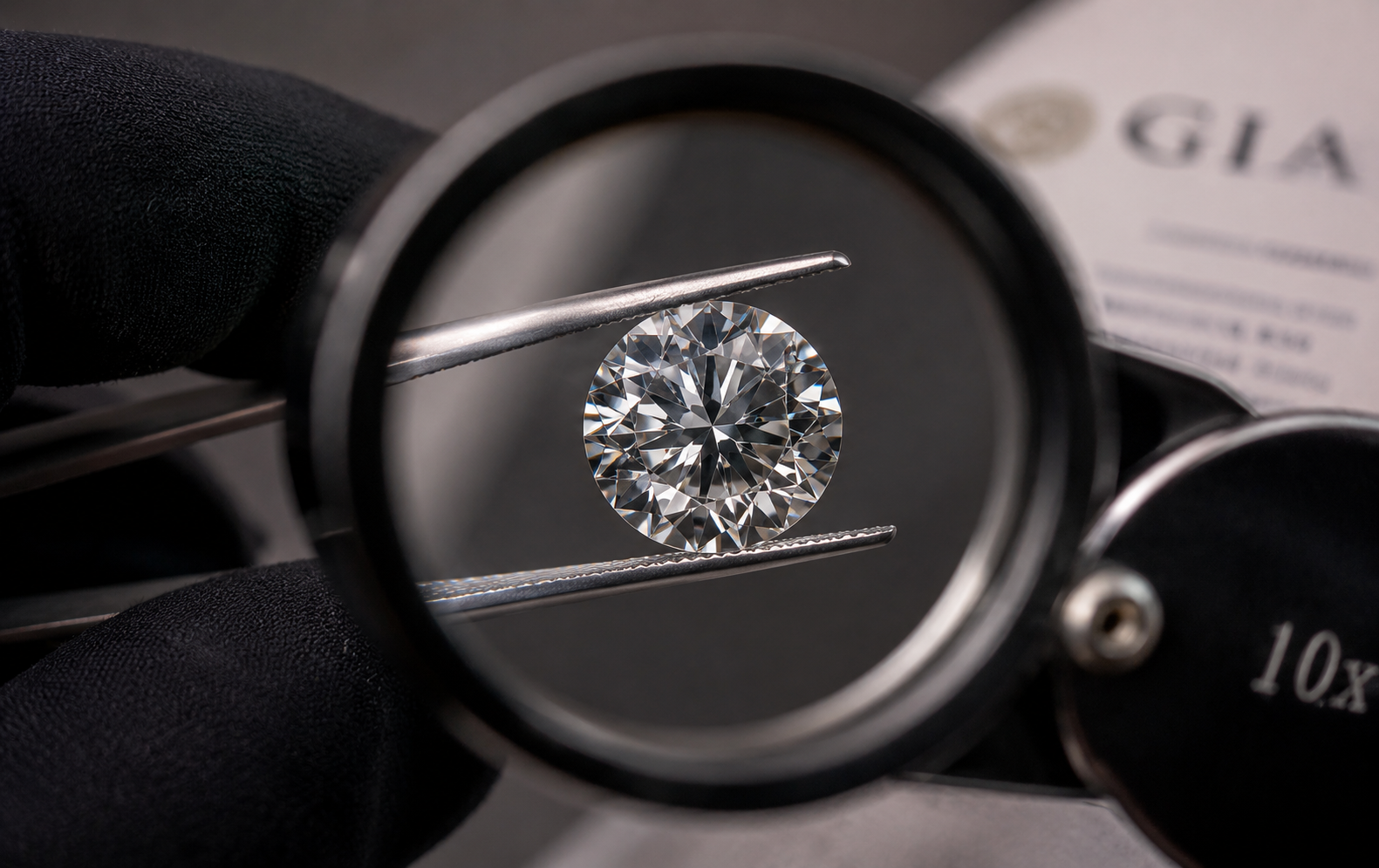
Almost all diamonds have tiny internal characteristics called inclusions (if inside) or blemishes (if on the surface). These are microscopic crystals or structural irregularities trapped within the diamond as it formed deep within the earth (or during the growth process for lab diamonds). They are what make your diamond unique.
2. The Clarity Scale Decoded
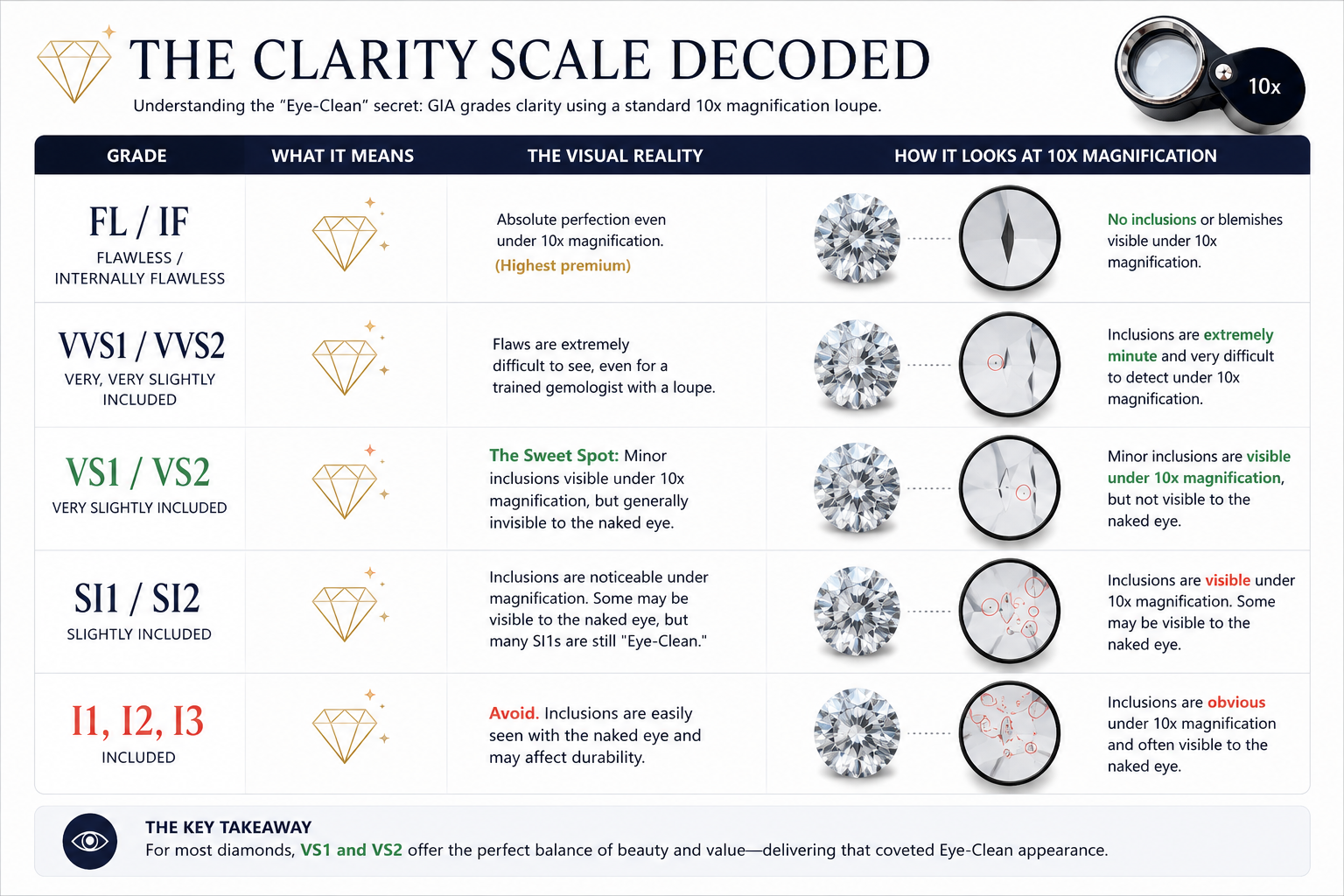
To understand the "Eye-Clean" secret, you first need to know how the GIA grades clarity using a standard 10x magnification loupe:
| Grade | What it Means | The Visual Reality |
|---|---|---|
| FL / IF | Flawless / Internally Flawless | Absolute perfection even under 10x magnification. (Highest premium). |
| VVS1 / VVS2 | Very, Very Slightly Included | Flaws are extremely difficult to see, even for a trained gemologist with a loupe. |
| VS1 / VS2 | Very Slightly Included | The Sweet Spot: Minor inclusions visible under 10x magnification, but generally invisible to the naked eye. |
| SI1 / SI2 | Slightly Included | Inclusions are noticeable under magnification. Some may be visible to the naked eye, but many SI1s are still "Eye-Clean." |
| I1, I2, I3 | Included | Avoid. Inclusions are easily seen with the naked eye and may affect durability. |
 3. The Definition of "Eye-Clean"
An "Eye-Clean" diamond is one that has inclusions, but those inclusions cannot be seen by the naked eye when viewed from a normal distance (about 6-12 inches) face-up.
Here is the catch: A VS2 or a great SI1 diamond can look exactly the same as an Internally Flawless diamond to anyone admiring your ring. The only place you’ll notice a difference is in the price tag—where a VS2 can cost thousands of dollars less than a VVS1 of the same size and color.
4. Expert Buying Tips for Navigating Clarity
- Location is Everything: An inclusion on the outer edge of the diamond can easily be covered by the prongs of your ring setting, making it virtually disappear.
- Shape Matters: Round Brilliant and Oval cuts are excellent at hiding flaws because of their intense sparkle. However, if you are buying an Emerald or Asscher cut (which have long, open facets like windows), you will need a higher clarity grade (VS1 or above) as they show inclusions much more easily.
- Size Amplifies Inclusions: The larger the diamond, the easier it is to spot flaws. An SI1 in a 1-carat diamond is often eye-clean, but an SI1 in a 3-carat diamond might not be.
We Do the Vetting For You
At KESONLY, we don't just read certificates; we physically and visually inspect our diamonds. We hand-select VS and SI graded diamonds that are 100% eye-clean, ensuring you pay for beauty you can see, not microscopic perfection you can't.
Want to find the perfect eye-clean diamond and maximize your budget for a larger carat size?
Contact Our Diamond Experts