


 2026-09-30 08:45
 By KESONLY


Make a Record You Will Be Glad to Have
A phone, a quiet background, and a few useful views can help you remember more than a jewel's most flattering angle.
The photograph you love most may show a ring on a moving hand or an earring half hidden by hair. Keep that picture. Then make a second kind: a clear record of the whole piece and the details you might otherwise forget.
A personal jewelry record has room for both. One image remembers the feeling of wearing it; another helps you describe its shape, fastening, or engraving when you need to. You can begin with the phone you already use and a small, uncluttered surface.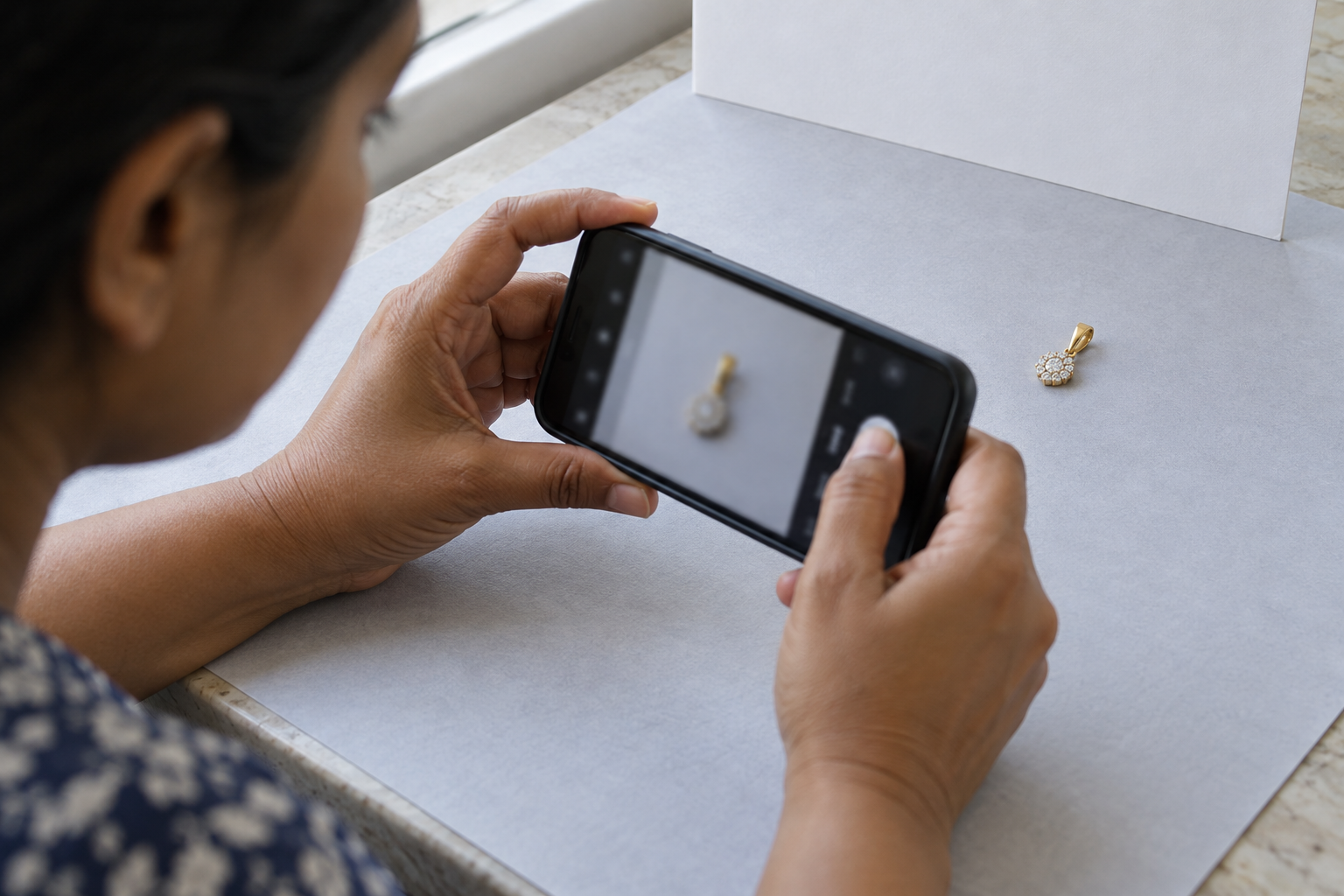
1. Set up a quiet place
Lay plain matte paper on a stable surface away from an edge, with a tray nearby for anything small. Choose soft daylight near a window and move out of harsh direct sun if reflections obscure the details. Remove distracting objects from the frame.
Use care-appropriate handling for the piece and keep the setup dry. There is no need to balance a ring precariously or suspend a necklace to make a useful record. An uncomplicated view in which the whole object is visible is an excellent beginning.
2. Make four useful views
Take a front view showing the complete outline, a side view showing height or depth, a reverse view, and a close view of a fastening or meaningful detail. For a pair, include both pieces together before photographing them separately.
Steady the phone and check the result at a larger size. If the detail is blurred, try moving the camera slightly farther away and focusing again. Keep a little space around the jewel so its edges remain clear. Photograph only details you can access without forcing or dismantling anything.
3. Keep the record honest
Avoid filters that alter the metal or gemstone color, and keep the original files. A photograph can help document appearance, but it does not establish a gemstone's identity, treatment, or grade. Pair images with the seller's description and any relevant professional documentation.
If an engraving is private, keep that image in your own record rather than a public album. When sharing a photograph for a question about a piece, send only the views and details needed for that conversation.
4. Add the information a camera cannot see
Give the photo folder a descriptive name and date. Add a short note recording what you know: where the piece came from, its documented materials, any relevant reference numbers, and the reason it matters to you. Separate confirmed facts from family recollections or assumptions.
Update the record after professional work that changes the piece, keeping the earlier images as part of its history. A simple backup makes the folder easier to preserve.
Finally, include one photograph of it being worn. The clear views describe the object; the worn view returns it to a life. Together, they create a record that is useful now and more meaningful with time.
When asking KESONLY about a piece, a clear photograph and a specific question are a helpful place to begin.
Bring the Details Into ViewContinue reading:
Jewelry on Camera · Polished or Brushed? · The Invisible Work of Jewelry