


 2026-09-18 10:10
 By KESONLY


What the Back of a Piece Can Tell You
Turn a jewel over. The less photographed side can open a much better conversation about how it is made.
Most jewelry photographs introduce the front: the bright stone, the graceful outline, the part meant to be seen. The back receives less attention, although it is often the part that meets the wearer. Turn the piece over and a different story begins, told through edges, openings, hinges, and small transitions in metal.
Looking at these details does not make you a bench jeweler. It does make you a more attentive owner. A useful inspection starts with curiosity and ends with the right questions.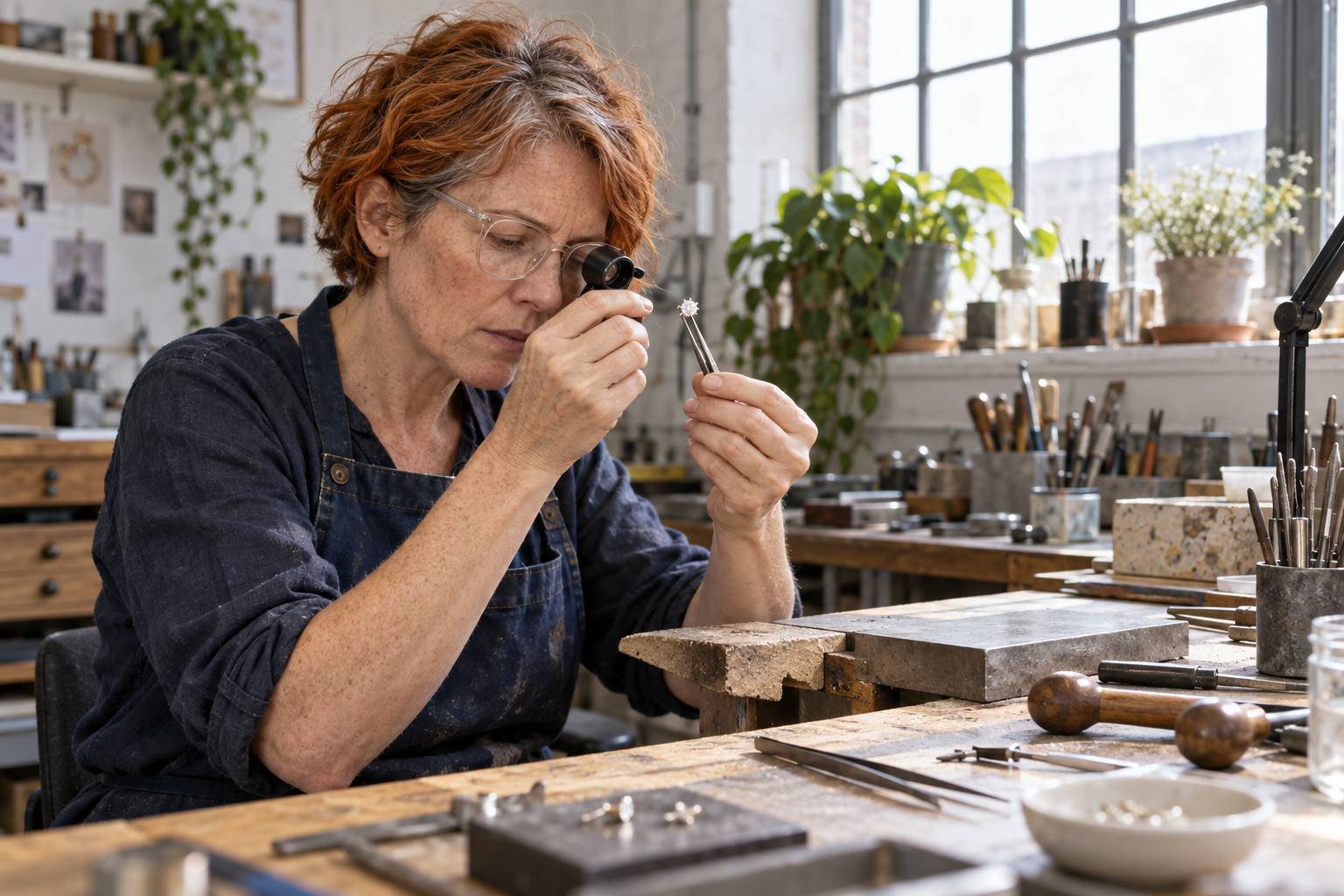
First, follow the surfaces
Look at the areas that touch skin. Do the transitions appear considered? How does the piece feel during an ordinary movement? A decorative front can be beautiful while the back remains simple, but the entire object should be part of the conversation.
Finish is also a design choice. Mirror polish, satin texture, and engraved surfaces produce different effects; shine alone does not establish workmanship. Ask which finishes are intentional and how they are expected to change with wear.
Then, notice how the parts meet
Settings, joints, and catches each perform a job. GIA's professional quality benchmarks illustrate why precise stone seating and consistent prong finishing matter. Those details require trained examination; a neat-looking photograph is not proof that a stone is secure.
Open space behind a gem, decorative galleries, and enclosed backs can belong to different designs. Do not judge a piece by the amount of visible metal alone. Ask the jeweler to explain the construction and demonstrate how any clasp or mechanism should be operated.
A conversation checklist
Comfort: which surfaces will touch skin or clothing, and can I try the piece through normal movements? Closure: how do I know it is fully engaged, and what should I do if its feel changes? Maintenance: which parts are likely to need periodic professional attention?
Documentation: what materials and stones are described in writing, and what information supports that description? These questions are deliberately practical. They make it easier to understand a piece without turning an enjoyable appointment into a test of technical vocabulary.
Know when to hand it over
If a stone seems loose, a catch behaves differently, or an edge begins catching where it did not before, stop wearing the piece and seek a professional assessment. Avoid pressing prongs or bending components to test them. The purpose of noticing a change is to get it examined, not to diagnose or repair it yourself.
For KESONLY's journal, craftsmanship is most interesting when it connects appearance with use. A jewel should invite admiration from across the room and thoughtful questions when it rests in your hand. The details behind the sparkle help make that second encounter rewarding.
Bring your construction, comfort, or material questions to KESONLY before choosing the detail you will live with.
Look a Little CloserContinue reading:
The Hidden Art of Diamond Rings · Repair or Redesign? · Polished or Brushed?