


 2026-09-14 08:40
 By KESONLY


Beauty with a Different Rhythm
Broad flashes, unusual proportions, and the pleasure of looking slowly: an introduction to diamonds with an older visual language.
The first thing you notice may be a pause. Turn an old-cut diamond, and a broad facet catches the light; turn it again, and the pattern changes. Its appeal can feel less like a shower of tiny sparks and more like a few deliberate flashes. For someone drawn to objects with visible character, that slower rhythm is part of the attraction.
An old-cut ring invites a different kind of attention. You find yourself looking at its outline, the shape of its reflections, and the small decisions that make this particular stone interesting. The question becomes personal: do you enjoy looking at it?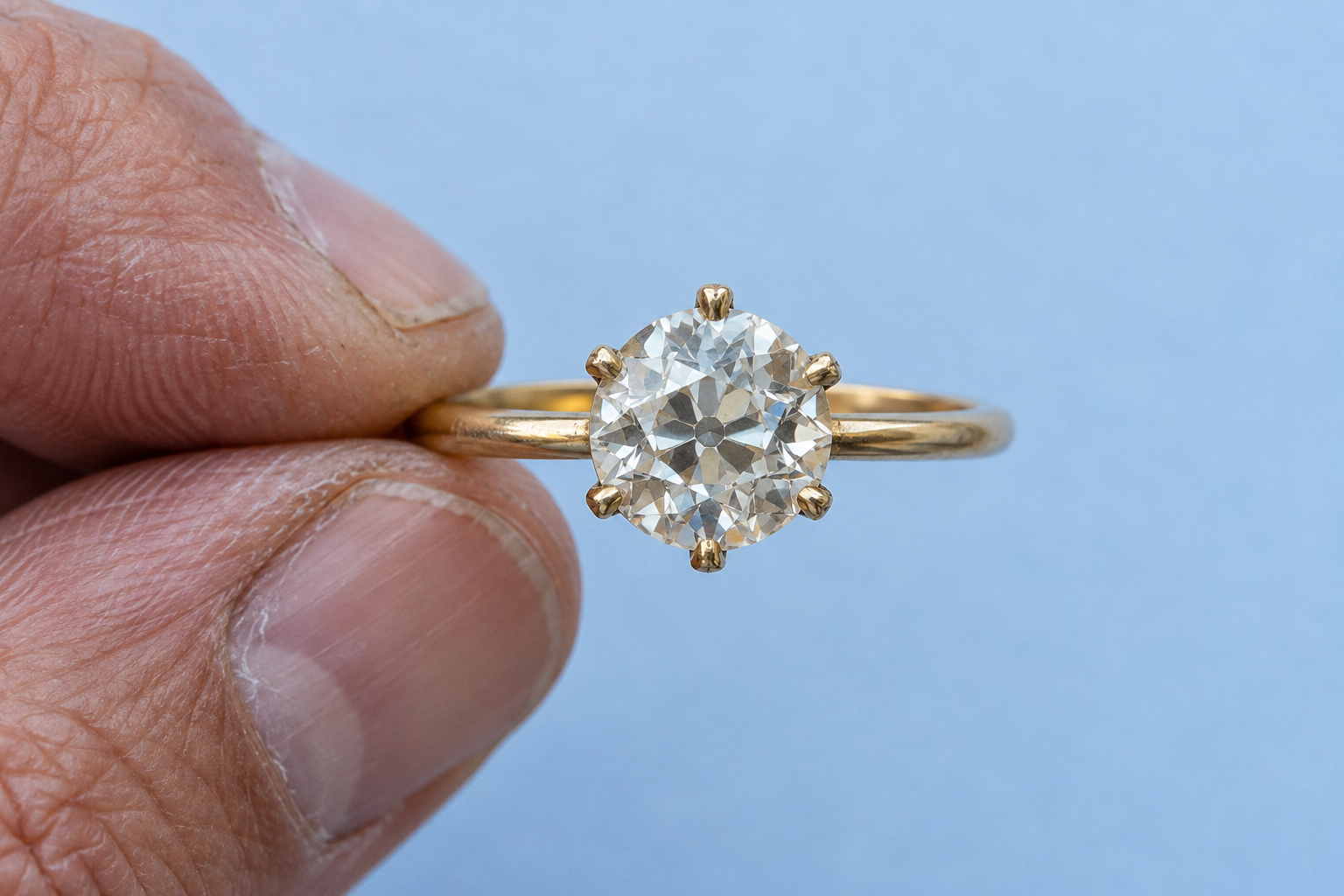
Two names worth knowing
Old mine cuts commonly have softly squared outlines, small tables, high crowns, and noticeable culets. The culet is the small facet at the very bottom of the diamond; viewed from above, a larger one can appear as a tiny shape at the center. Old European cuts are generally rounder. These are useful starting points, although individual stones vary.
In a finished ring, the surrounding metal changes the composition again. A narrow gold band can leave the stone's outline prominent; an ornate mounting makes the entire ring the subject. Neither approach needs to imitate a museum piece to feel considered.
A style is not a birth certificate
A newly cut diamond can reproduce an antique cutting style. Likewise, an older stone can be placed in a new mounting. The appearance of age, the age of the diamond's cutting, and the age of the ring are separate matters. Ask the seller what is known and what evidence supports the description.
This distinction leaves room for different kinds of pleasure. You might love a documented historical object, or simply prefer broad facets in a contemporary design. You do not need an elaborate provenance story to justify the second choice.
Give the diamond more than one moment
Look at the ring in ordinary room light and near a window, then let your hand move naturally. Notice the areas that brighten and darken, and whether its personality remains appealing when the display lights are gone. A close photograph is useful; a view at normal wearing distance tells another part of the story.
For an older mounting, arrange a professional condition assessment. Romance cannot tell you whether worn metal needs attention. Keep any documented history with the ring, and let a qualified jeweler explain which details belong to its design and which reflect wear.
KESONLY's journal celebrates this sort of unhurried looking. Sometimes a piece becomes memorable because it offers a slightly unexpected version of something familiar. A diamond with a different rhythm may be exactly the one you keep turning toward the light.
Drawn to broad facets or antique-inspired proportions? Tell KESONLY which details have caught your eye.
Share Your InspirationContinue reading:
The Asscher-Cut Diamond · Diamond Cut and Light · Emerald-Cut Diamonds