


 2026-08-27 09:40
 By KESONLY


A Small Study in Geometry and Light
An invitation to slow down and notice the patterns inside a diamond.
At first glance, an Asscher-cut diamond can feel almost architectural. Its outline offers a clear boundary; within it, changing reflections seem to open another space. For someone who loves a tiled entrance hall or the geometry of a carefully drawn window, that order can be deeply appealing.
The attraction need not begin with expertise. Sometimes it begins with a simple observation: this is the diamond you want to keep looking at. Understanding a little about its structure can help you describe why.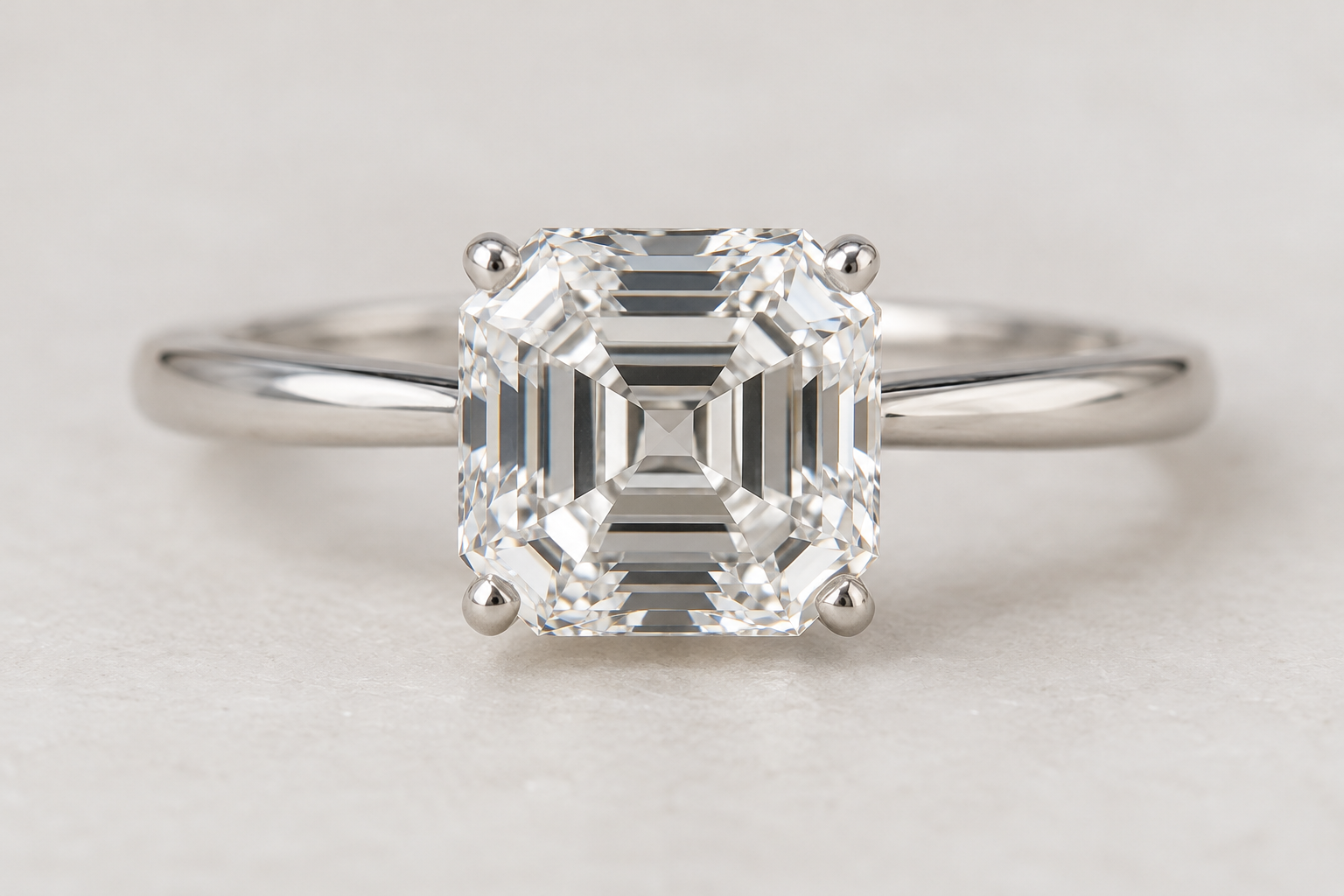
1. Read the Pattern
The Asscher cut has a square outline with trimmed corners and a step-cut facet arrangement. Its broad, orderly reflections create the layered visual impression often compared with a hall of mirrors. That pattern is distinct from the many smaller flashes associated with brilliant-style faceting.
Those words describe a family of appearances, not a promise that every example will look the same. Look at the actual diamond. Notice how its internal pattern balances, how the corners contribute to the outline, and whether your eye enjoys returning to its center.
2. Give Light Time to Move
A still photograph preserves one position under one set of lighting conditions. Ask to see the diamond move slowly, then pause. Observe it face-on and at gentle angles. If possible, compare its appearance in more than one ordinary lighting environment.
There is no need to invent a numerical score for your reaction. Perhaps you prefer an especially crisp sense of symmetry. Perhaps one stone feels more expressive as your hand moves. Make those observations before allowing an elaborate setting or flattering presentation to decide the entire impression.
3. Choose the Whole Composition
A simple setting can leave more visual attention on the diamond's geometry. Additional stones or decorative shoulders may create a different mood. Consider the complete silhouette from a normal viewing distance, since that is how the ring will usually accompany you through the day.
Ask for the individual stone's measurements and grading information, then discuss any questions with a qualified jewelry professional. A shape name is a starting point, while the details belong to the particular diamond. Keep your own preferences in the conversation alongside the documentation.
Choosing an Asscher-cut diamond can be an exercise in attention. You may find yourself drawn to its deliberate lines, then attached to the way one particular stone changes under familiar light. At KESONLY, we value that progression from noticing a design to recognizing something of yourself within it.
Bring your questions, favorite proportions, and visual references to a conversation with KESONLY.
Explore Your Diamond PreferencesContinue reading:
Emerald-Cut Diamonds · Old-Cut Diamonds · Baguette Diamonds