


 2026-07-10 19:28
 By KESONLY


The Hidden Diamond Flaws Not Listed on Your Certificate
Why is that GIA-certified diamond so cheap online? Discover the industry secret of Brown, Green, and Milky (BGM) diamonds and learn how to protect your investment.
 You have done your homework. You are looking at a beautiful 1 Carat, G Color, VS1 Clarity, Triple Excellent Cut diamond. You find one online that is priced 20% to 30% lower than the rest of the market. You think you have found the deal of a lifetime.
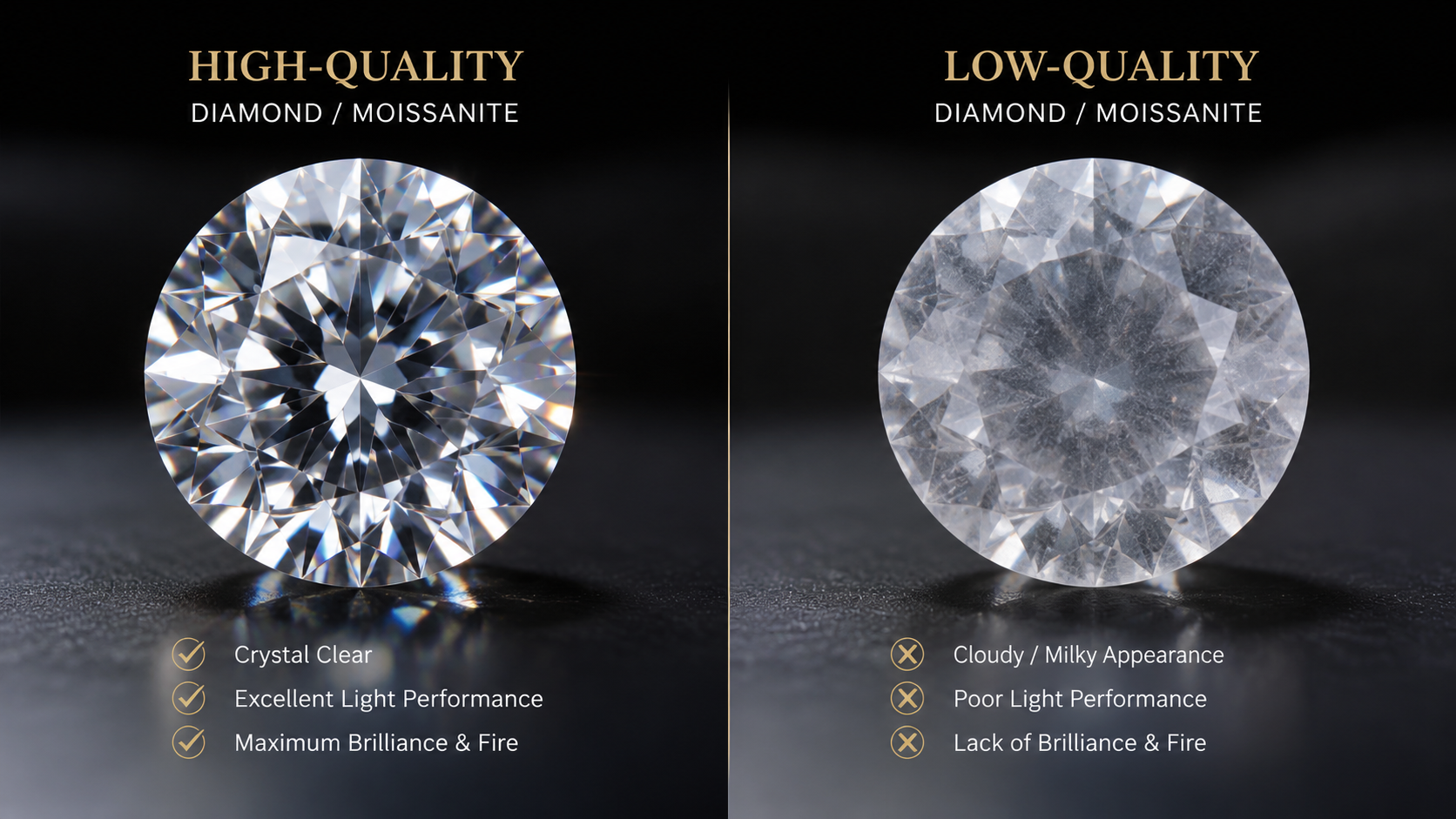
But when the ring arrives, something feels off. The diamond doesn’t sparkle like it should. It looks slightly dull, hazy, or has a weird murky undertone. Welcome to the biggest trap in the diamond industry: The BGM Diamond.
At KESONLY, our gemologists reject thousands of stones every year based on this hidden classification. Here is everything you need to know about BGM (Brown, Green, Milky) and why relying purely on a piece of paper isn't enough.
1. The Blind Spot of the Color Scale (Brown & Green)
When you look at the GIA Color Scale (D to Z), you are actually looking at how much yellow tint is in the stone. D is completely colorless, and as you move down the alphabet, the diamond gets progressively more yellow.
Here is the catch: A diamond can also have Brown (B) or Green (G) undertones due to its chemical formation deep in the Earth.
- Because the main grading scale only measures yellow, a diamond with an ugly brown or muddy green tint can still legally be graded as an "H" or "I" Color.
- These stones look darker, dirtier, and less brilliant than a normal yellow-tinted diamond of the same grade. This is why wholesale dealers discount them heavily.
2. The "Milky" Effect: The Sparkle Killer
The "M" in BGM stands for Milky. This is arguably the most dangerous flaw because it directly destroys a diamond's primary appeal: its brilliance.
A milky diamond is a stone whose rough crystal material naturally scatters light internally. Even with a Flawless or VVS clarity grade, the diamond looks like it has been dipped in skim milk. It lacks crispness and transparency. No matter how many times you clean it, it will always look slightly cloudy and "sleepy."
3. How to Spot a BGM Diamond
The terrifying truth is that "BGM" is not written anywhere on a GIA or IGI certificate. It is a visual characteristic that can only be identified through professional inspection.
| The Flaw | How It Looks in Real Life | The Warning Sign |
|---|---|---|
| Brown (B) | The diamond has a murky, coffee, or brownish shadow, especially noticeable from the side profile. | Prices that are significantly lower than other diamonds of the exact same Color and Clarity. |
| Green (G) | A very slight, unnatural olive or greenish cast that makes the diamond look dull instead of bright. | Often found in lower color grades (I, J, K) where jewelers try to mask the green tint as normal warmth. |
| Milky (M) | The diamond lacks transparency. It looks hazy, cloudy, or "sleepy" even under bright spotlights. | Certificates that mention "Clarity grade is based on clouds that are not shown." (Though milky material can exist without this note!) |
4. The "No-BGM" Promise
When you buy a diamond purely based on an online spreadsheet or a certificate grade, you are playing Russian roulette with BGM stones. Many discount online retailers source these rejected stones to offer the "lowest price guaranteed."
Our Strict "No-BGM" Policy
At KESONLY, we refuse to compromise on visual beauty. We don't just sell certificates; we sell extraordinary light performance.
Every single diamond in our collection is physically inspected by our gemologists to ensure it is 100% free of Brown, Green, and Milky characteristics. We guarantee crisp, transparent, and vibrant diamonds that will blind the room—not dull stones hiding behind a piece of paper.
Shop the Purest Diamonds NowContinue reading:
The "Eye-Clean" Secret · Diamond Clarity · The Truth About "Hearts & Arrows"