


 2026-09-10 08:30
 By KESONLY


Comfort Is Part of the Design
Look beyond the length on a product page and consider how a bracelet moves, fastens, and feels on your wrist.
A bracelet is rarely still. It changes position as you reach for a door, turn a page, or rest your hands in your lap. The way it moves becomes part of your experience of the design, just as much as its sparkle.
That is why a useful fitting conversation starts with more than a single length. Your wrist, the bracelet's construction, and your preferred amount of movement all matter. A piece that suits someone else's routine may feel quite different in yours.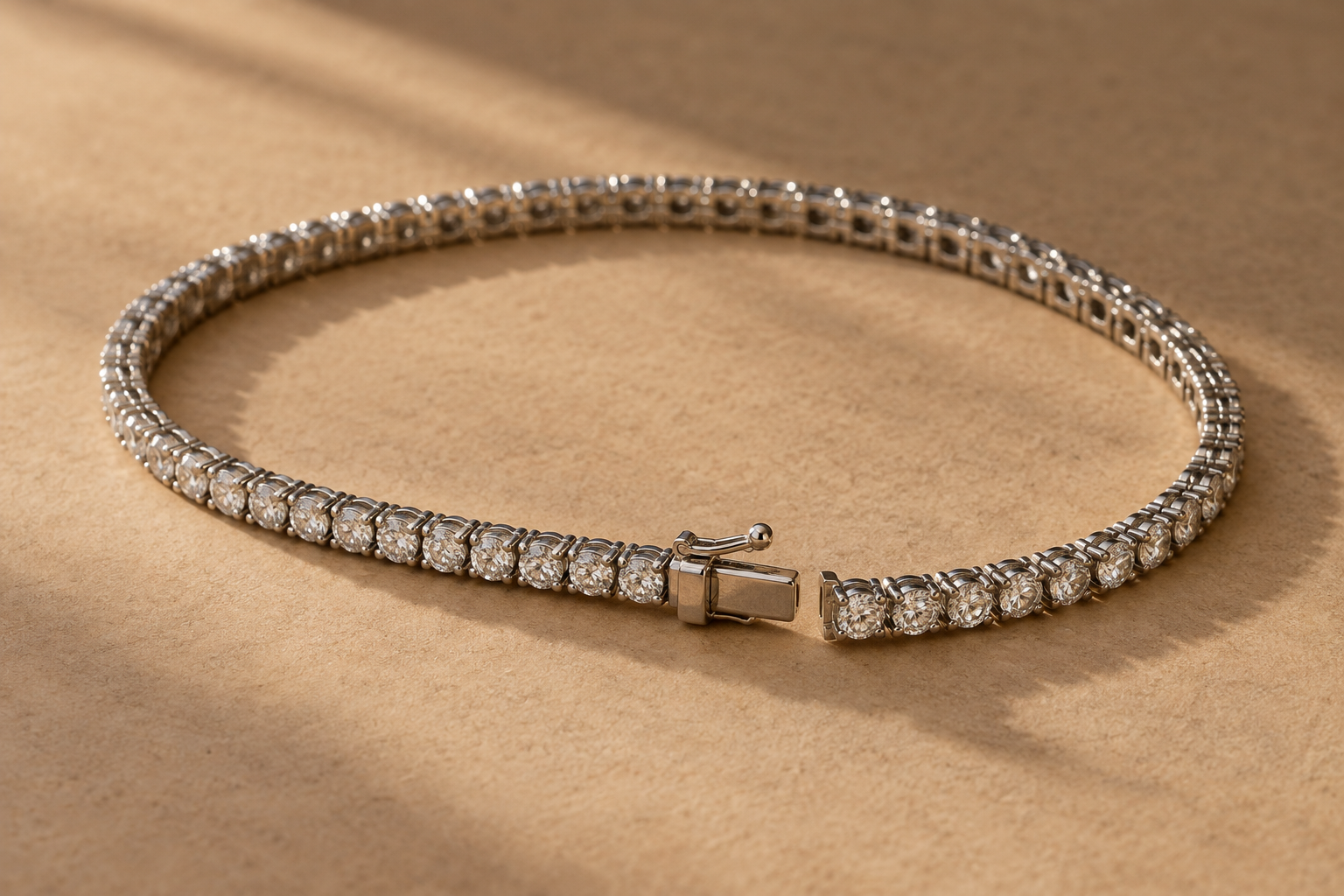
1. Measure for the Type of Bracelet
For a flexible bracelet, follow the seller's measuring instructions and clarify whether the listed length includes the fastening. Wrist circumference is a starting measurement, but it is not automatically the finished length you should order.
A rigid bangle raises different questions, especially if it must pass over the hand. A hinged design may open around the wrist instead. Ask for the relevant internal dimensions and fitting method for that particular construction, rather than applying one universal allowance to every bracelet.
2. Observe the Movement
When trying a bracelet, let your arm rest, then bend your wrist gently and raise your hand. Notice how far the piece travels and whether that movement is pleasant. A preference for a close fit is different from accepting uncomfortable pressure.
Try it with the sleeves you wear regularly. A cuff may repeatedly push the bracelet toward your hand, while a loose sleeve may hide it completely. If you like a watch nearby, check the relationship carefully and avoid continual contact between the pieces.
| Construction | What to clarify | What to observe |
|---|---|---|
| Flexible bracelet | Finished length, including the clasp | Drape and movement around the wrist |
| Closed rigid bangle | Internal dimensions and hand-fitting method | How it passes over the hand |
| Hinged bangle | Internal dimensions and opening mechanism | Wrist comfort and ease of fastening |
3. Learn the Fastening Before You Leave
Ask for a demonstration of the actual clasp and any safety catch. Practice opening and closing it without force, and check that you understand the sequence. A small mechanism should feel manageable in the way you intend to use it.
If a fastening stops closing as expected, a link feels unusual, or a stone appears loose, stop wearing the piece and arrange a professional inspection. Do not bend a catch yourself to make it feel tighter. The cause and the appropriate repair depend on the construction.
4. Ask About Adjustment Before Ordering
Some designs offer more adjustment options than others. Before buying, clarify whether the particular bracelet can be altered, what that work would involve, and whether any stated terms would change. A removable link, an extender, and a different size are separate possibilities, not interchangeable assumptions.
At KESONLY, we believe an informed choice includes the parts of a piece that a photograph cannot explain. Ask about flexibility, finished dimensions, and the fastening. A bracelet becomes easier to enjoy when its movement feels natural to you.
Share your wrist measurement and preferred bracelet style with KESONLY, and ask about the specific design.
Discuss the Details of FitOriginal KESONLY editorial. AI-generated conceptual imagery does not represent a specific product.
Continue reading:
Where Jewelry Rests · The Story of the Tennis Bracelet · Diamond Cufflinks